A backyard can be more than just a space that’s left behind a house. It can be a place where people feel comfortable, where they can relax, entertain, enjoy nature, and be around family with thoughtfully planned activities.
With the right backyard landscaping ideas, you can not only beautify an outdoor area, but also make it more useful as well, without having to start a renovation that is going to cost you a lot of money.
Landscaping can be done in any size yard or outdoor space and can create a living environment of plants, pathways, seating, lighting, and decorative elements as well as functional components. The secret is knowing that you have some space and that you select enhancements that are compatible with your lifestyle, climate, maintenance, and budget.
What are the Advantages of Backyard Landscaping Ideas?
Inland landscaping can help to create a more organized and inviting space for your backyard. Create a space that is not used for one purpose, but rather multiple spaces for various activities.
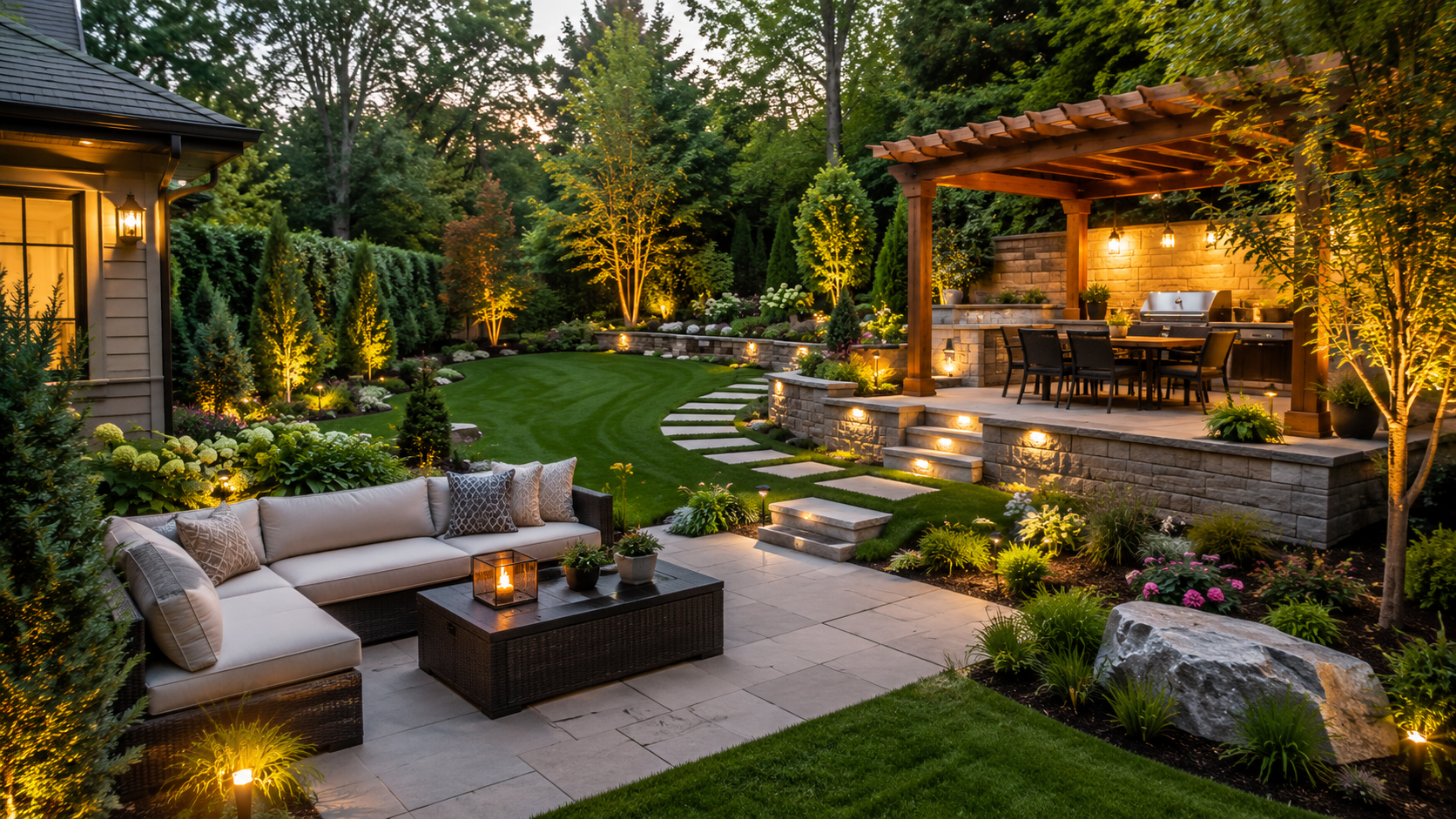
For instance, one section of the backyard could feature a seating area, one area with garden beds, or a garden area with a small lawn. A walkway may link these spaces together and provide natural circulation throughout the yard.
Color, texture, shade, and visual interest can also be added with landscaping. Trees can add height, flowering plants can add seasonal color, and groundcover can soften hard surfaces. When small changes are incorporated into a broader design, they can make a significant impact.
What can you do to Make Your Backyard Seating Area Comfortable?
A seating area may provide the basis for an outdoor living area. Homeowners might opt for chairs, benches, outdoor sofas, or a dinner table, depending on the amount of space they have available.
If you have a small yard, you can get comfortable seating by using compact furniture. If you have a larger backyard, you could have a separate patio for outdoor living that has several seating areas.
Seating may be more functional in warm weather with the addition of shade. Provide some protection from direct sunlight with a pergola, umbrella, shade sail, or a strategically placed tree. Weatherproof fabrics and cushions outdoors will also create a comfortable and personal environment.
Which Plant is the Best for a Backyard Garden?
One of the most crucial elements of landscaping is plant selection. Optimal choices will vary with local climate, sunshine, soil, water supply, and ease of maintenance.
Consider native plants as they are adapted to the environmental conditions. Can also offer habitat and food for local wildlife.
It is possible to have a planting scheme that is balanced and incorporates various heights and textures. Trees and shrubs of varying heights can serve as a backdrop, medium-sized plants can line borders, and low-growing plants can carpet the ground.
When selecting plants for their beauty, take into account future size and requirements. This can stop overcrowding and minimise future maintenance.
How can a Little Backyard be Bigger?
Even in the smallest spaces, there are great landscaping designs to be done. A good strategy is to not have the yard split into too many areas. Having a consistent layout can make the space feel bigger.
Vertical landscaping can also be of assistance. Plants grown in a vertical garden, wall planters, trellises, and tall containers are examples of plants that grow vertically, minimizing the amount of ground space they require.
Consider using curves or carefully placed planting beds to create visual depth. Certain areas can also seem more open with mirrors or reflective decorative elements, but they need to be strategically placed outside.
It is also important to keep furniture in proportion to the space. Large furniture pieces can easily fill up a small backyard.
What Role can Pathways play to Improve Backyard Design?
Pathways are used for both utilitarian and aesthetic purposes. They lead users through the backyards and link relevant spaces like patios, gardens, gates, and storage spaces.
Stone, brick, concrete, gravel, or stepping stones can be used as materials. The choice should complement the style of the house and other outdoor features.
You can make a straight path clean and formal, or a gently curved one to give a more natural feel to the garden. It is important to install them properly, as uneven surfaces can become difficult to walk on and may become water traps.
What can be Done With Outdoor Lighting to Enhance an Outdoor Backspace?
An outdoor light can make the backyard a place to stay active after dark. It can also accentuate landscaping elements and add visibility in the paths and steps.
Path lights can provide illumination for walking areas, and accent lights can highlight trees, plants, walls, or architectural features. String lights can help make seating areas a relaxed environment.
Solar light fixtures can be useful in areas where it is hard to install electrical wiring. But any exterior lighting must be chosen and mounted with consideration for the weather and electrical safety.
What Can Water Features Bring to a Backyard?
Water features can be a great focal point in a landscape. Small fountains, ponds, bubbling features, or decorative water bowls can be part of the options for a yard, depending on its size.
The sound and movement of water can create a relaxing atmosphere. Water features do, however, need maintenance, too, such as cleaning and controlling algae or debris.
If your homeowner is looking for something that will require minimal maintenance, a small recirculating fountain might work better than a large pond. The feature should also be suitable for the local climate and location where it could be maintained safely.
Why is it that a Backyard can be more eco-friendly?
Use of water-saving plants can help conserve water and promote natural habitats. Drought-tolerant or native plants may be a good place to begin.
Rain gardens can help control rainwater runoff by channeling it to areas with vegetation that is tolerant of inundation. Composting can also be used to naturally fertilize gardens.
Mulch may help to conserve soil moisture and suppress weed growth. Permeable materials for pathways and patios could also help to let more water into the soil than flows directly off hard surfaces.
There is no need to sacrifice beauty when it comes to sustainable landscaping. Creating a green environment can look good as well as being good for the planet, with careful planning.
Designing a Backyard for Entertaining?
If you have a family and/or friends visiting often, design the yard around socializing. A central area for gathering, such as a patio or deck, can offer a place to gather, and there can be more areas for conversation with seating near the gathering area.
Outdoor dining furniture can enhance the enjoyment of meals, and an outdoor cooking area or barbecue can make entertaining more convenient. Evening activities need to be adequately lit but not overly glaring.
Also, there should be sufficient space for manoeuvre. If furniture and other decorative features make it difficult to move around in the backyard, it will be an uncomfortable place to enjoy.
How to Privacy Your Backyard?
Another key factor to consider in the design of a backyard is privacy. Though fences are a no-brainer, there are softer solutions: plants.
Natural screening can be provided by hedges, shrubs, the varieties of bamboo that will thrive in this environment, and by small trees. Another option is to use a trellis on which to grow climbers – this can give privacy without taking up a lot of space.
The optimal privacy solution will depend on property boundaries, local ordinance, amount of sun exposure, maintenance requirements, and level of privacy desired.
What can you do to make Backyard Landscaping Low Maintenance?
It’s not just about a beautiful landscape, but also about one that doesn’t need a lot of maintenance. One of the easiest backyard landscaping ideas is to choose the right plants and eliminate excess lawn space.
Perennial plants may come back year after year, and mulch may help keep weeds down and soil moist. Use of an automated irrigation system may also allow efficient watering.
With the use of hardscapes, including patios, pathways, stone features, etc., less planting will require regular attention. But for hard surfaces, there is always a need for cleaning and maintenance.
The aim is to design a backyard for the time you have available to devote to its upkeep.
How Can You Plan a Backyard Landscaping Project?
The first step in buying plants or materials is to make a basic evaluation of the backyard. Take into account the sun, water flow, the soil, trees, entry points, and the areas that are regularly used.
Then identify the main activity of the area. Do you need a garden, an entertaining area, a children’s play area, a quiet space to relax, or a mixture of all of these?
Sketching out a simple drawing can be useful to help you visualize where each feature will be placed. You can avoid spending money unnecessarily if you have a budget in mind beforehand.
If a landscape project involves changes in the grade, placement of retaining walls, irrigation or drainage, it may be best to hire a professional to create a landscape plan.
Frequently Asked Questions (FAQ)
What is the cost of Backyard Landscaping?
The price will differ significantly based on the size of the yard, materials, plants, labor, and complexity of the job. It’s possible to make relatively inexpensive small improvements, and make expensive big improvements.
What Plants Will Thrive in Your Backyard Garden?
The most suitable plants are those that are best adapted to the local climate, soil, sun, and water availability. Plants that are native and well suited to the environment are often good choices as they may be more manageable to care for.
What Can I Do To Make My Small Backyard Nice?
Install furniture of proportionate size, use vertical planting, a path for easy access, minimal complementary materials, and layer plants. A clean and simple design can help to expand a small yard.
What Can I Do To Make My Backyard More Private?
Climbing plants, trellises, trees, shrubs, hedges, and fences can all create privacy. When multiple methods are employed, a more natural, attractive screen can be achieved.
Is it possible to get Low-Maintenance Backyard Landscaping Ideas?
Yes. Mulch, native plants, drought-tolerant plants, less lawn area, and efficient irrigation will all help to reduce maintenance.
Conclusion
With careful yard landscaping ideas, it’s achievable to convert a simple outdoor space into a practical and lovely extension of the home. There are numerous ways to customize a backyard with comfortable chairs and colorful planting beds, pathways, lights, privacy screens, and sustainable elements.
The most successful landscape designs start with sensible planning. Think about the purpose of the space, what plants will thrive in the area, the amount of care that is possible, and how it will be integrated.
Whether you’re making some basic tweaks to your yard or transforming your entire yard, thoughtful landscaping can produce an outdoor environment that is pleasurable, comfortable, and enjoyable year-round.