The word “marble” comes from the Greek word marmaros, which literally translates to “shining stone”. In fact, the intrinsic brightness of this rock, as a result of the low refractive index of the calcite (the main mineral component), is highly appreciated since ancient times, allowing light to percolate in the stone and thus reflect inside.
The first marble objects originated in the Neolithic period of ancient Greece, which had many marble quarries. From this point, the use of marble spread to the beginnings of Greek sculpture and then to classical architecture.
The Romans, too, saw the value in marble because of the influence of Greek culture. At first, therefore, the Romans imported marble from Greece and, subsequently, began to extract it in their own territories, such as in the Luni area from which the famous Carrara marble comes.
What Are the Characteristics of Marble?
Marble is a type of what? Marble is a metamorphic rock whose main component is calcium carbonate (CaCO3). Marbles come in various forms and are categorized based on their composition and impurities within.
How Is Marble Formed?
Due to its characteristic purity (no impurity and residue), it definitely raises a series of questions, including what kind of rock is marble and how is marble formed? Well, marble is the result of a recrystallization of carbonate minerals present within sedimentary rocks. In general, these rocks form in the regional metamorphism stage, which is characterized by high temperature and pressure that tend to increase the grain size of the crystals and make the marble have the typical saccharoid appearance. This consequently produces a mosaic of calcite or dolomite crystals, which gradually reduces any fossils, stratification, or sedimentary structure present at the start, and it is from this that natural marble rock is formed and its classic clarity is obtained.
Where Is Marble Found?
Marble is usually found in huge seams throughout the world. However, what is the location of the abundant presence of marble? Well, though marble is found in many countries, four countries have almost 50 percent of the marble in the world, namely Italy, China, India, and Spain. Besides these four, the marble quarries are also in Greece, Turkey, and the U.S.
In Tuscany, there are probably the most famous and precious types of marble, such as Carrara and Calacatta. These Italian marble stones are unarguably regarded as some of the best and most opulent ones, a symbol of marble par excellence.
What Are the Different Types of Marble?
Based on the composition, it is possible to draw up a first categorization of the different types of marble:
- Pure marbles (without fossils): Crystalline limestone marbles. They come in both colors and white.
- Crystalline structure: The second type of marble typically has a lot of colours, and its crystalline structure is less defined than in the former type of marble.
- Clastic marbles: fragments of rocks, cemented fossils, as well as siliceous or calcareous materials are visible in the texture.
- Green colored marbles: called serpentine marbles because of a specific group of minerals called the serpentine group, which is added to the limestone. Sometimes, they may also be in darker shades near blue or yellow depending on which mineral of the serpentine group is more prevalent in the majority of the marble.
Instead, the coloring of the various types of marble is due to the presence or absence of mineral impurities such as silt, iron oxides, clay, or sand. The recrystallization process that these impurities also undergo during the metamorphic processes leads to the formation of the colored veins typical of marble.
Among the various types of marble, only the white one was originally used as it was considered pure and perfect because of its absence of impurities inside. In modern and contemporary times, on the other hand, every sort of marble (even the most colorful with the strangest hues) has been reinterpreted as a sign of a vision of charm and elegance.
It’s exactly what makes marble one of the most imitated and reproduced materials to give ‘luxury’ to things and surfaces in a fake copy. Many materials are available on the market for their marble appearance: the most common marble effects are certainly the classic ones that are white in color, characterized by veins or streaks that tend to gray.
But porcelain stoneware, one of the most popular materials of recent years, can’t be left out, as it comes in so many varieties and colors, ranging from wood to stone, and of course fake marble. In addition to fake marble tile porcelain stoneware, there are other examples such as fake marble countertops, some furniture coatings or wall cladding panels, up to the resins for fake marble floors. The idea is simple: any marble, even fake marble, is instantly connected to the notions of luxury, value, elegance and solemnity.
What Is White Marble?
As we anticipated above, white marble continues to represent the finest among the different types of marble. The purity and brightness of its colour are attributed to the absence of impurities within it, as well as the extremely homogeneous composition and the almost complete content of Calcium Carbonate, whose almost uniform colour is from pearly white to ivory white. White marble is the preferred variety when it comes to marble interior design: marble cladding and marble tiles are commonplace in the stone industry. The white marble comes in several varieties, which are introduced below: white Carrara marble; Biancone marble.
White Carrara Marble
White Carrara marble is surely one of the most famous and most renowned of all Carrara marbles, and of all marble types par excellence. The characteristic of the white Carrara marble is that its grain is thin, homogeneous, and compact with a high calcium carbonate content. The refractive index of white Carrara marble is low; therefore, it can absorb light to create a special shine and make the surroundings bright.
Biancone Marble
Another name for Biancone marble is Bianco Perlino or Bianco d’Asiago, referring to the location from which it is mined, the Asiago Plateau. It is a neutral white marble, solid and of high quality, and may have an ice white colour up to a slightly warmer colour depending on the high or low quarrying area of the quarry.
Mostly Biancone marble is utilized as marble cladding, as well as for the internal and external floors, both singularly and in combination with Rosso Asiago marble for the realization of checkered floors.
What Is Black Marble?
While marble is a metamorphosed limestone, black marble is actually sedimentary limestone with a lot of organic bitumen in it, which gives it its characteristic viscous black color. Among the kinds of black marble that are included, it is possible to find the black Marquina marble and the black absolute marble.
Black Marquina Marble
Black Marquina marble is named after the black minerals in its content, such as carbon or bitumen (which is produced from sludge), and is a bituminous lime. Nero Marquina marble features a deep black color with white inserts that stem from fossil remains and also from whitish veins that may have a tendency towards green.
Black absolute Marble
Black absolute marble, also known as black Zimbabwe stone (from the country it is mined from), is not a marble, but a natural stone of magmatic origin similar to granite (Gabbro). The color of the grain of the black absolute marble varies from dark gray to black, and it is very uniform, making it a very homogeneous and elegant rock.
What Is Beige Marble?
Marble interior design is also popular in beige, and it is the color acquired by the stone throughout the millennia due to the presence of sandy sediment in the stone. The two types of beige marble that we offer are Botticino marble and Crema Marfil marble.
Botticino Marble
The Botticino marble is mined in the municipality of Botticino and in the adjoining municipalities, in the area of Brescia. It is a beige marble with brown veins, extremely compact and with a homogeneous grain composed of fine, carbonatic and mainly calcareous mud.
Crema Marfil Marble
Crema Marfil marble is a delightful Spanish marble, with a consistent beige tone and thin gold colored veins which make it even more valuable and identifiable. Crema Marfil marble is probably considered the best beige marble on the market due to its impact resistance, excellent physical qualities, and low permeability coefficient.
What Is Travertine?
Travertine is a chemical and organogenic sedimentary rock, consisting mainly of calcium carbonate minerals. Travertine is not usually sold as marble or limestone, but rather the name is given to it. Travertine is a natural stone like marble and granite, but formed under different conditions: the waters that form travertine are rich in bicarbonates and give off carbon dioxide to the atmosphere and to the photosynthetic plant organisms, the process favoring the precipitation of calcium carbonate in the form of encrustations. The morphology of the deposits and their texture are related to the type of structure to be encrusted, the velocity of the water flow, the rate of precipitation, and the contribution of vegetation to CO2 removal, and thus the texture of the deposits is less dense than that of marble.
Travertine is considered an extremely versatile stone also due to its very wide range of colors: based on some factors including the stone age and the presence of oxides or impurities (e.g., sand, silt, plants), the colors it can take vary from milky white to walnut, from pink to scarlet red.
Noce Travertine
There are lighter varieties, but noce travertine is a dark colored travertine, ranging in color from brown to walnut. There are wide varieties throughout the world, but it is generally accepted that the most valuable varieties are from this area, and it is a typical Tuscan stone.
Roman Travertine
It’s impossible not to mention travertine but not mention the Roman travertine. Travertine has been introduced as a result of the term “tiburtinus”, because the main source of the stone is found in the area below Tivoli. Travertine, in fact, was one of the materials primarily used in Roman construction: its use was so typical (think of the monuments of the caliber of the Colosseum, St. Peter’s Basilica, the Trevi Fountain) that it was later called Roman travertine. There are several variations of Roman travertine which generally tend towards lighter shades, from cream to ivory and from dove gray to light gray.
What Is Green Marble?
Green Marble is a stone that varies in shades of green from light green to nearly black. It is frequently coloured by the highly prevalent presence of minerals of the serpentine group of rocks, which were originally rich in magnesium, containing the impurities of silica; one of the varieties of green marble, in fact, the green marble of Prato, is called green marble of the serpentine group.
Green Marbles are pieces of oceanic crust that came to the surface after the collision of two tectonic plates. They are therefore magmatic serpentine rocks often consisting of a brecciated structure that have undergone re-cementation processes of serpentine clasts and processes of chemical deposition of white calcite from circulating waters rich in calcium bicarbonate.
Green Guatemala Marble
Even though the main source of Verde Guatemala marble is now India, it’s clear that it is named for the country of origin, which is Guatemala in Central America. Green Guatemala marble is an emerald green marble that is typically uniform with a background of jagged, darker veins.
Verde Alpi
Serpentinites are frequent, especially in the Apennine region, but can also be found in the Alpine area. The word Verde Alpi is used generically for the rocks that are extracted in northern Italy, especially in the province of Aosta, which is a serpentinite rock. Verde Alpi marble is a brecciated stone, the majority of which is dark in colour with lighter veins which can be seen more or less.
How Is Marble Used in Interior Design?
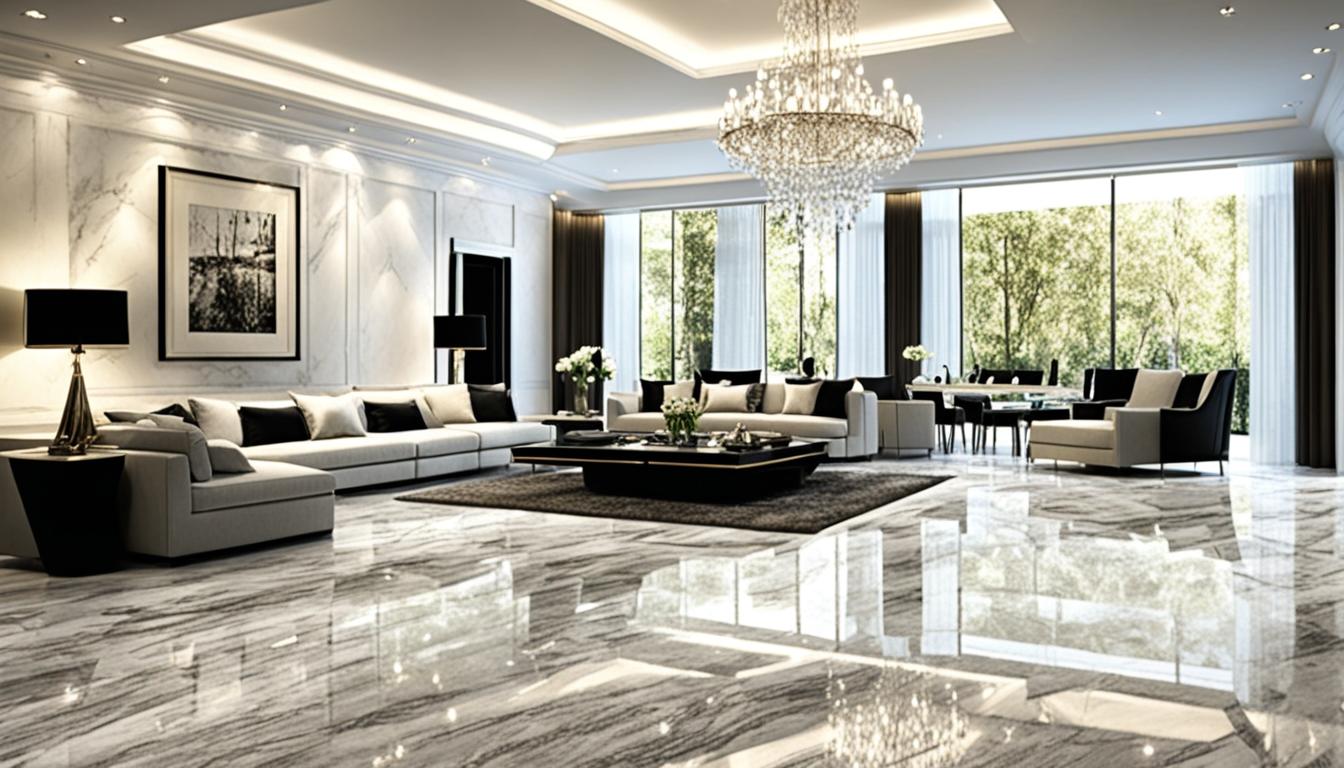
Marble has been used since the times of antiquity, as we have seen: statues, temples, and important public buildings started their use with the construction. One thing is clear: marble is definitely a luxurious material, which can definitely elevate and enhance the place where it is used. The durability, impact, and abrasion resistance of this stone are undoubtedly one of the main reasons for its use in marble interior design; marble is actually used for indoor and outdoor furnishing.
There are, of course, aesthetic reasons for marble interior design, in addition to the technical and practical ones. First of all, the intrinsic brightness of this material: the ability of marble to reflect light makes it possible to considerably accentuate the brightness of the rooms. Another aesthetic quality of marble is its softness to the eye and touch and, last but not least, an infinite range of colors that enhances and welcomes both rustic and retro spaces, minimal and hypermodern ones.
FAQs
1. What is marble?
Marble is a rock that is formed naturally by exposing limestone to high heat and pressure over many millions of years. It is used for its beauty, distinct veining, and strength and is utilized in construction and interior design.
2. Softness and weakness?
Marble is recognized by its smooth texture, its natural patterns, its polish, and many colors. Resistant, heat-proof, easy to shape, and can be scratched or stained if not maintained properly.
3. What are the general applications of Marble?
Marble is used for all of the following applications: flooring, kitchen countertops, bathroom vanities, wall cladding, staircases, fireplaces, sculptures, and decorative furniture. It is also seen in expensive houses and commercial buildings.
4. Would marble make a good kitchen countertop?
Yes, marble can be used for kitchen countertops for its beauty and resistance to heat. It is porous, though, and could need to be sealed from time to time to keep stains from food, oils, and acidic liquids out.
5. What colours are there in Marbles?
Marble is available in many different colors such as white, black, beige, grey, green, brown, pink, and blue. The veining and the patterns are different for each slab, so each is a unique piece.